Tri Dharma Integration: Transforming Hydroponics from Laboratory Research to Sustainable Business and Food Security
The application of hydroponics in the academic environment has now shifted from being a mere laboratory practicum tool to a strategic instrument for addressing global challenges as part of the implementation of the Tri Dharma. The role of Biology lecturers through research serves as a vital foundation, utilizing measurable parameters that determine production success. Ani Sulistiyani, S.Pd., M.Si., a lecturer in Botany at the Biology Department, Faculty of Mathematics and Natural Sciences (FMIPA), is spearheading efforts to increase student research interest in hydroponics. This initiative is realized through a collaboration with the lecturer in charge of the Plant Nutrition and Phytohormones course, Dedi Satriawan, S.Si., M.Si., by conducting intensive socialization for sixth-semester students.
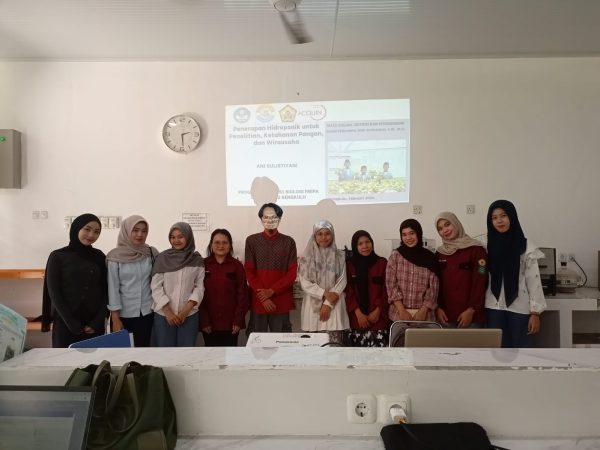
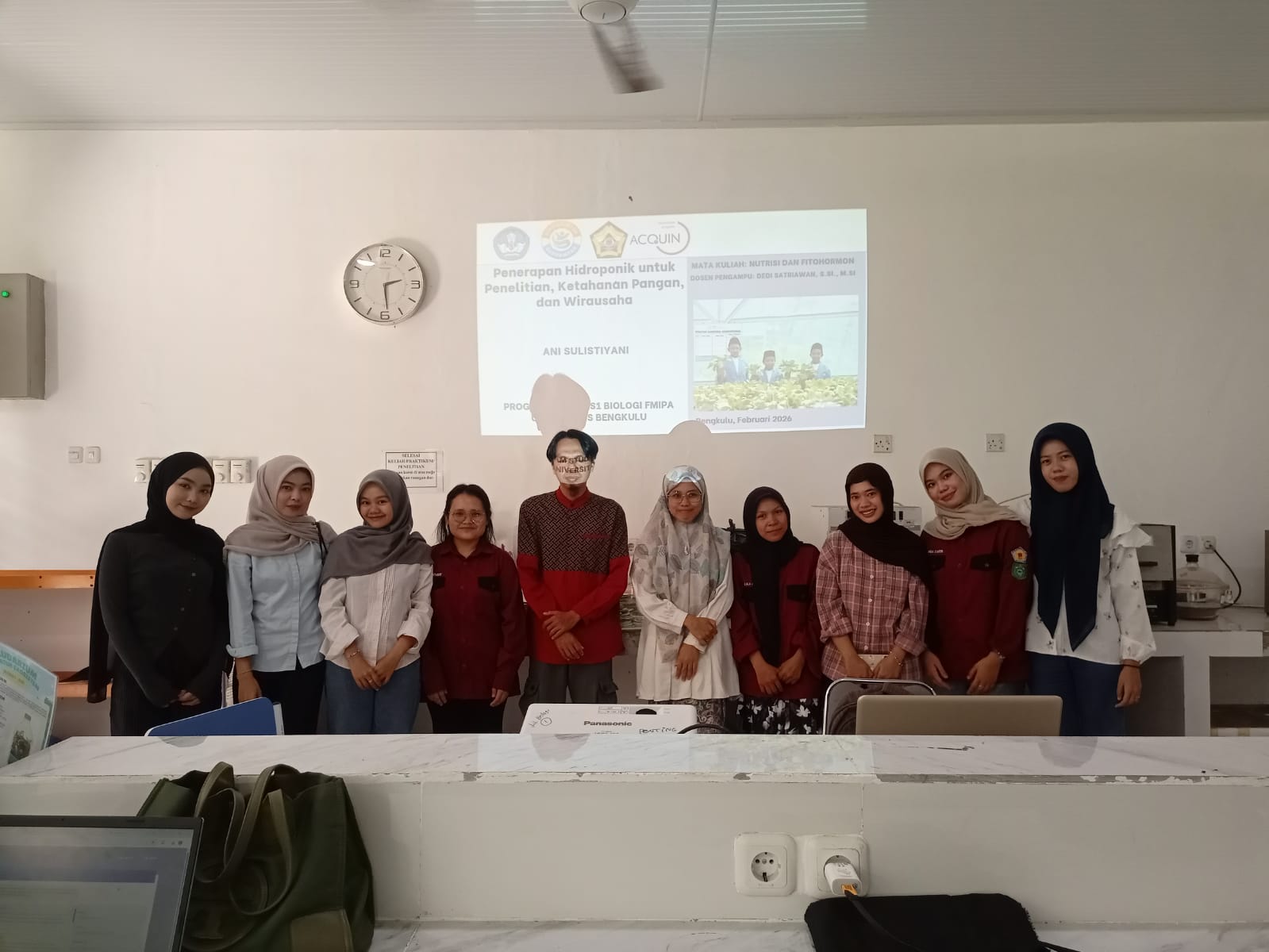
The program aims to provide a comprehensive understanding of the application of hydroponic technology, both as a research object and a future innovation opportunity. This socialization was held on Friday and Saturday, February 27–28, 2026, at the Botany Laboratory, Biology Department, FMIPA, University of Bengkulu. The first day’s activities commenced with an opening by the course lecturer, Dedi Satriawan, S.Si., M.Si., who provided a comprehensive briefing on the scheduled program. This was followed by a presentation on hydroponic socialization by Ani Sulistiyani, S.Pd., M.Si., which explored the strategic advantages and various hydroponic techniques. The session also highlighted diverse research examples and successful young entrepreneurs who have achieved excellence in hydroponic cultivation. On the second day, the focus shifted toward technical preparation to support the practicum for the Plant Nutrition and Phytohormones course. The primary agenda included the optimization of hydroponic installations and the sterilization of the cultivation area by cleaning the insect nets. These steps were essential to ensure a controlled, pest-free growing environment, thereby maintaining the integrity and sustainability of the students’ research.
The integration of robust research, urgent food security needs, and student entrepreneurial spirit is the key to producing Biology graduates who are not only theoretically proficient but also serve as solutions to national food challenges through green technology approaches. Hydroponic research is more than just an alternative cultivation method; it is a research instrument used to obtain accurate, measurable, and controlled physiological data. Furthermore, hydroponics—which produces pesticide-free vegetables—is capable of providing self-sufficient food within the campus environment. It is highly hoped that in the future, hydroponics will not only serve as a living Biology laboratory supporting research and practicums but will also be optimized to produce healthy vegetables as a self-sustaining food security effort for the community and its surroundings.
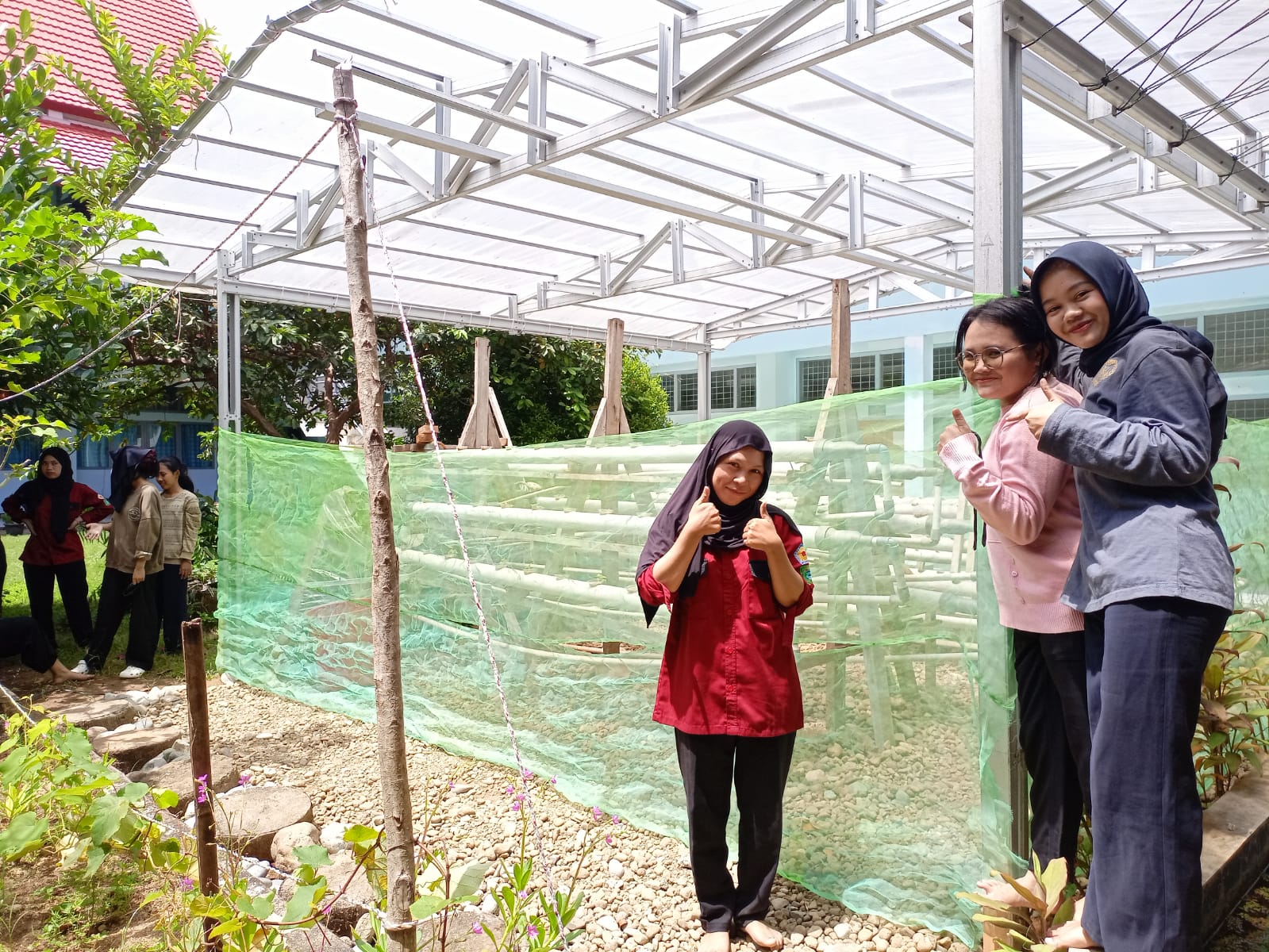
The integration of the Tri Dharma within the hydroponic ecosystem proves that biology is not merely a classroom memorization subject, but a vital instrument capable of addressing economic and ecological challenges simultaneously. The transformation from laboratory research to a business scale represents a concrete step in “grounding” science to provide a real economic impact for Gen Z while strengthening the pillars of national food security. The expectation is that this synergy between faculty expertise, technological innovation, and student entrepreneurship will not remain a mere pilot project but will evolve into a massive and sustainable business model. We dream of seeing a young generation proud to be entrepreneurs, where their skilled hands guided by scientific data are capable of transforming limited land into independent food barns for the nation. This ensures that every biological research we develop today truly becomes a solution for future survival, ultimately realizing the Sustainable Development Goals (SDGs) (Writer: Ani Sulistiyani).