University of Bengkulu Lecturers and Students Conduct Community Service on Improving Free-Range Chicken Farming Skills in Selika II Village, Kaur Regency
One of the primary duties of university lecturers is to engage in community service, a component of the “Tridarma” (Three Pillars) of higher education. A team comprising lecturers and students from the Department of Biology (Faculty of Mathematics and Natural Sciences) and the Department of Animal Science (Faculty of Agriculture)—led by Prof. Dr. Jarulis, S.Si., M.Si.—conducted a community service activity in Selika II Village, Kaur Regency, Bengkulu Province. The event took place on Friday, August 21, 2026, in the meeting hall of the Selika II Village Office. Attendees included Village Head Nuki Hartono, other village officials, and members of the Women Farmers Group (KWT). A total of 25 participants took part in the activity.
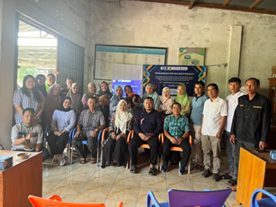
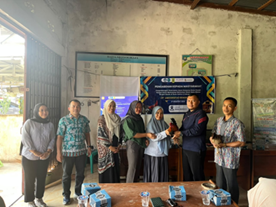
Activity documentation (photo by Nisa, August 21, 2026)
Free-range native chickens hold strategic value for rural households due to their adaptability to the environment and suitability for small-scale rearing. Developing local chicken farming is also relevant to providing animal protein sources within the community, particularly in supplying raw materials for the Free Nutritious Meal (MBG) program. Consequently, improving husbandry and feeding management is crucial for boosting productivity, while utilizing local feed ingredients offers an alternative to reduce reliance on commercial feed.
The community service initiative in Selika II Village aimed to establish an initial model for group-managed free-range native chicken farming. This model encompasses enhancing knowledge and skills, providing coops and initial livestock, strengthening feed and health management, and introducing the use of local resources. A participatory approach was adopted to ensure direct community involvement in problem identification, learning, practical application, and activity management—aligning with experiences from local chicken farmer empowerment programs based on Participatory Rural Appraisal (PRA).
The activity garnered significant attention and an enthusiastic reception from the residents of Selika II Village. A key achievement was the installation of a coop unit with a capacity of approximately 40–50 birds at the home of a Farmer Group Leader; this facility serves as both a demonstration site and a communal rearing center. In the initial phase, 11 chickens—comprising one male and ten laying-ready females—were provided. In addition to the livestock, the team supplied 100 kg of feed (estimated to cover needs for 2–3 months), vitamins, disinfectant, nesting boxes, traditional palm-leaf brooms, and other husbandry equipment. If these brood hens are allowed to lay and hatch eggs over the next 6 to 12 months—following a cycle of one batch every two months—the total number of chickens is projected to reach approximately 211. This activity has the potential to provide significant benefits to the community of Selika II Village by supplying the primary ingredients for the government’s MBG program.
