Empowering MSMEs in Enggano Island through Post-Production Technology and Solar-Powered Oil Spinner
A community engagement program was conducted to support the development of Micro, Small, and Medium Enterprises (MSMEs) on Enggano Island, one of the outermost islands of Bengkulu Province. The program was designed to achieve the main objective of “Moving MSMEs Up a Level” (UMKM Naik Kelas) by strengthening various aspects of MSME management and production. The activities covered the management and improvement of production facilities, assistance in obtaining BPOM and halal certification, post-production improvement through appropriate technology, as well as improvements in packaging, branding, and marketing strategies.
To achieve this objective, the community engagement program was implemented collaboratively by three teams with complementary areas of expertise. The first team focused on improving production facilities and assisting partners in obtaining the necessary business and product permits. The second team focused on post-production improvement through the provision of a solar-powered oil spinner technology. The third team addressed product packaging, branding, and marketing. This integrated approach was intended to ensure that improvements were not limited to production capacity but also extended to product quality, legality, marketability, and business competitiveness.
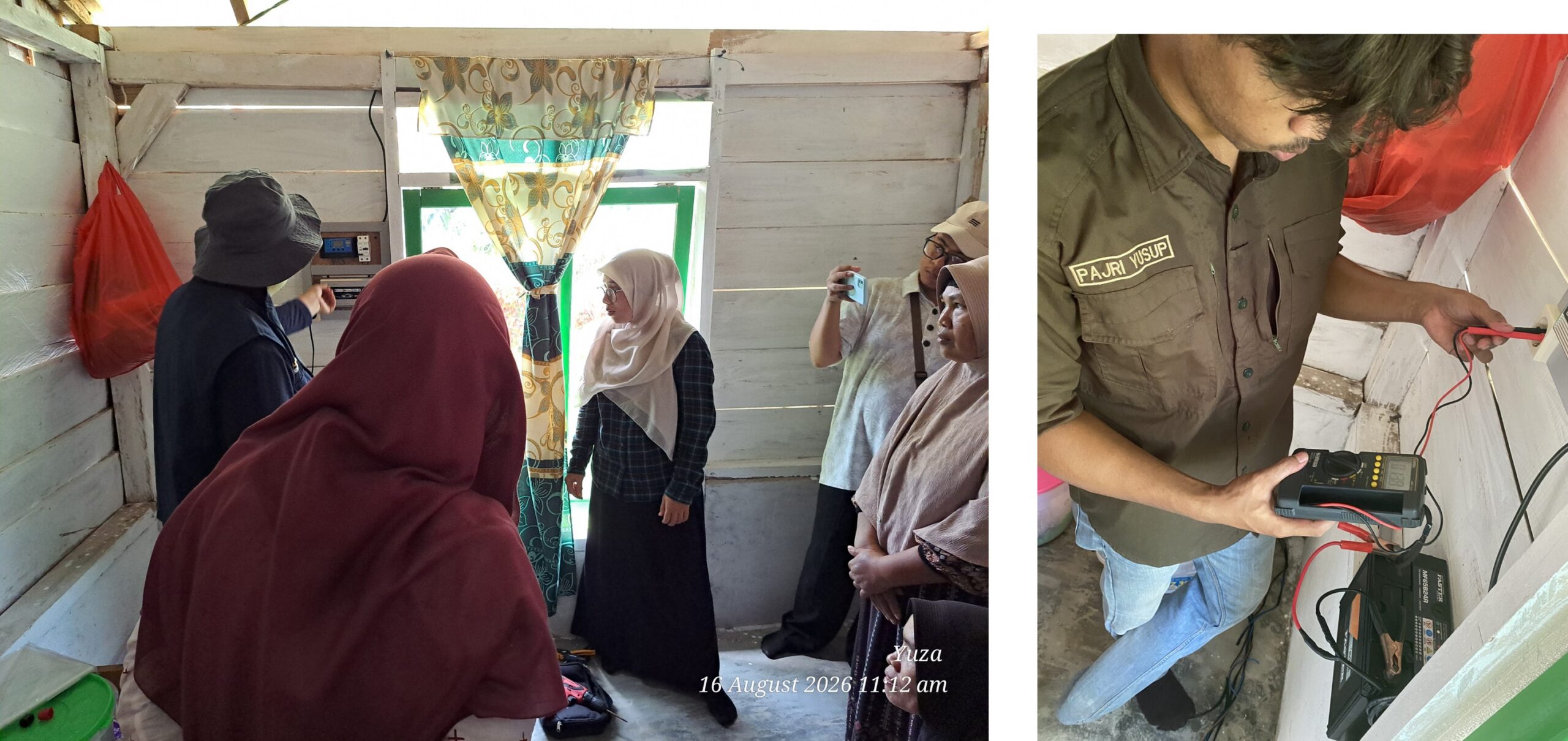
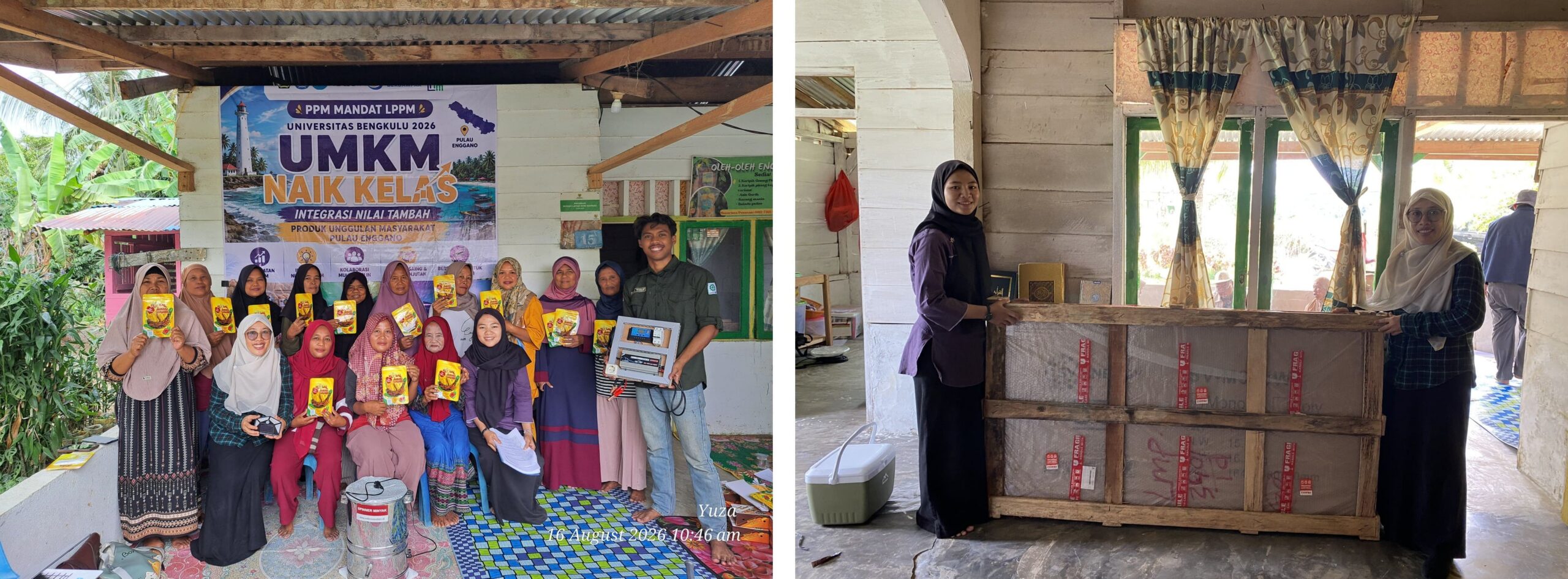
The post-production improvement team consisted of Dr. Elfi Yuliza (Physics), Prof. Dr. Eng. Ir. Dedi Suryadi (Mechanical Engineering), and Novalio Daratha, Ph.D. (Electrical Engineering), supported by a team of students. The team provided a solar-powered oil spinner system for MSMEs whose products rely on frying processes. The technology is designed to reduce excess oil remaining in fried products after the frying process, thereby improving product quality and potentially extending its shelf life. The use of a solar-powered system was particularly relevant to the conditions of Enggano Island, where access to conventional fuel can be limited and costly. Solar energy provides an alternative and more sustainable energy source for operating the equipment.
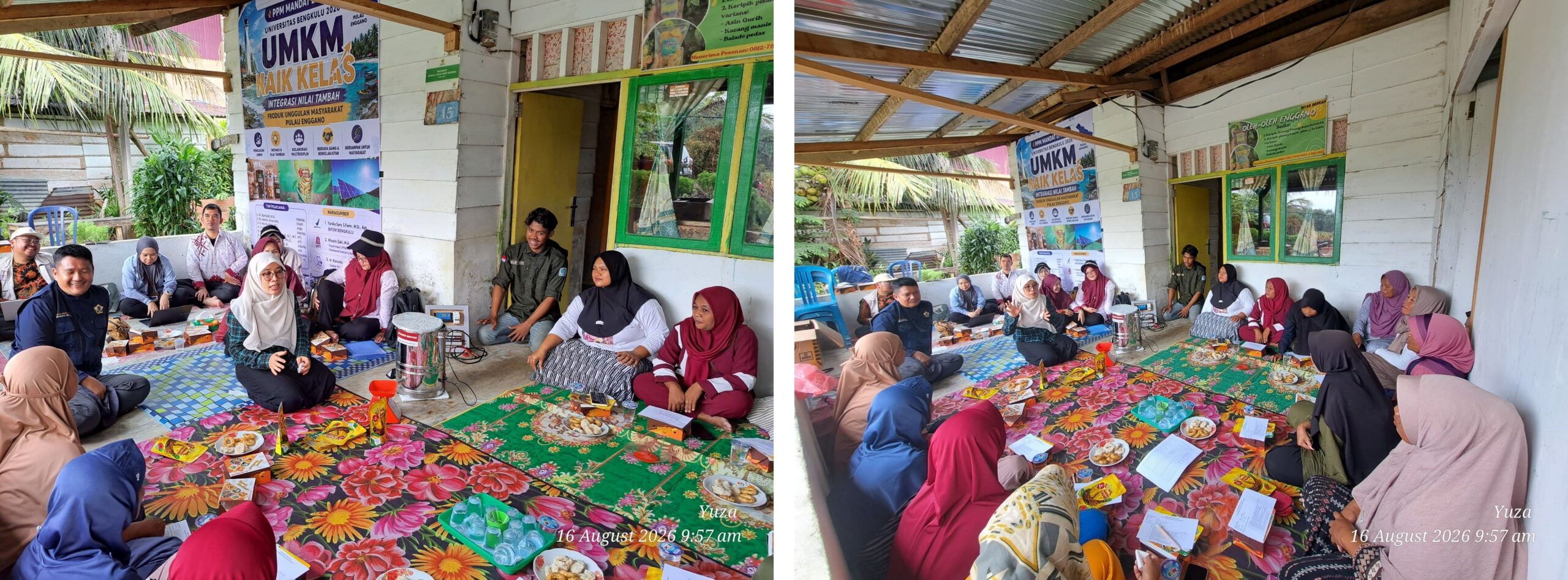
The implementation of this activity began with discussions and consultations with MSME partners to identify their production needs and post-production challenges. The team then prepared and tested the equipment in the laboratory before bringing the system to Enggano Island. The field activities included technology dissemination, installation of the solar-powered spinner system, and a practical demonstration of its operation and maintenance. The MSME partners and local women involved in household-based businesses actively participated in the activities and showed great enthusiasm in learning and adopting the technology.
The provision of this technology is expected to contribute to the gradual transformation of local MSMEs into more competitive, efficient, and sustainable businesses. Through the integration of production facility improvements, legal certification, post-production technology, improved packaging, branding, and marketing, the program provides a comprehensive pathway toward achieving the “UMKM Naik Kelas” objective on Enggano Island.
The community engagement team expresses its sincere appreciation to the Institute for Research and Community Service (LPPM), Universitas Bengkulu, for providing funding support through the Mandate Scheme. This support has enabled the implementation of an interdisciplinary community engagement program that combines scientific knowledge, appropriate technology, renewable energy, and community empowerment to strengthen the economic potential of MSMEs in one of Bengkulu’s outermost islands.